The Profession of Arms: A Guide for Young Army Officers
It takes courage, especially for a young officer, to check a man met on the road for not saluting properly or for slovenly appearance, but, every time he does, it adds to his stock of moral courage, and whatever the soldier may say, he has respect for the officer who does pull him up.
Read Document →The Dragon's Teeth: Assessing China's Military Modernization
PLA has focused on modernising its capabilities across all warfare domains to achieve these goals. This includes land, air, and maritime operations, nuclear, space, counter-space, electronic warfare and cyberspace operations, aiming to become a fully integrated joint force.
Read Document →Transforming the PLA: A Decade of reorganisation from SSF to ISF
PRC has engaged in a sustained and broad effort to transform the PLA from an infantry-heavy, low-technology, ground forces-centric military into a high-technology, networked force with an increasing emphasis on joint operations and naval and air power projection.
Read Document →Eyes without Borders: Exploring the World of Open Source Intelligence (OSINT) in the Digital Age
Open Source Intelligence (OSINT) is gaining prominence with the rise of social media, the digital society and the vast growth of publicly and commercially available information (PAI and CAI).
Read Document →
The PLA’s Developing Cyber Warfare Capabilities and India's Options
Informationised warfare blurs the lines between peacetime and wartime. A nation in the information age cannot wait for the hostilities to break out to collect intelligence, carryout influence operations, develop antisatellite systems or design computer software weapons.
Read Document →
Galwan and After
Why did China did this when he is under tremendous pressure in all fronts, is this China's salami slice tactics being progressed rigorously, what will be new Rules of Engagement, what will be escalatory control mechanism, who has taken this decision, will there be some pressure put by China in India's North-East through insurgency.
Read Document →
India’s Joint Doctrine for Cyberspace Operations: A Critical Review
Chief of Defence Staff (CDS) General Anil Chauhan and Secretary, Department of Military Affairs, formally released declassified versions of the Joint Doctrines for Cyberspace Operations during the Chiefs of Staff Committee meeting in New Delhi.
Read Document →
Know your Enemy General(now Field Marshal) Syed Aseem Munir
Gen SA Munir's position in the hierarchy of Pakistan was not very comfortable. The state of economy, insurgency in Pakhtoonistan and Balochistan, attack on the Jaffar Express, constant protests by supporters of Imran Khan's supporters inside and outside of parliament.
Read Document →
Decoding Operation SINDOOR: Key Aspects and Implications
Precision strikes were carried out on nine sites—four in Pakistan and five in PoK—linked to anti-India terrorist groups such as the LeT, JeM and the Hizbul Mujahideen. The targeted sites included Muridke (LeT headquarters) and Bahawalpur (JeM headquarters).
Read Document →
Chinese Cyber Exploitation in India's Power Grid - Is There a linkage to Mumbai Power Outage?
The New York Times (NYT), based on analysis by a U.S. based private intelligence firm Recorded Future, reported that a Chinese entity penetrated India’s power grid at multiple load dispatch points. Chinese malware intruded into the control systems that manage electric supply across India, along with a high-voltage transmission substation and a coal-fired power plant
Read Document →1 March 2019
The magical effects of a good surgical strike
India’s options on Pakistan
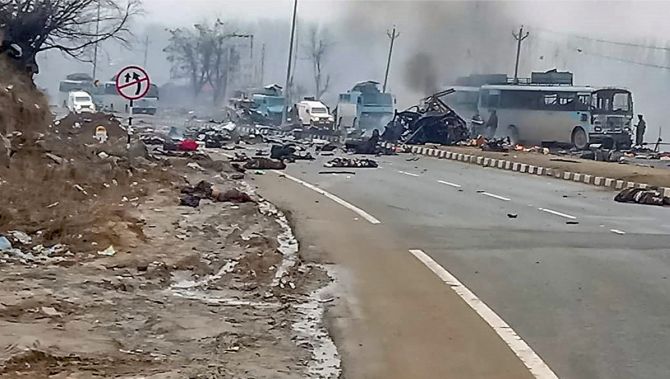
Pakistan didn’t wait long to squash India’s Balakot airstrike bravado with its own air incursions. However, the financially strapped country cannot afford a serious escalation of hostilities, not least because India could wreak massive punishment. This explains why Pakistan’s military is at pains to affirm that it is not seeking war.Is India Ready For a Cyber Attack?
The Indian Air Force (IAF) on 26 February officially confirmed that it conducted airstrikes on terror camps in Pakistan Occupied Kashmir and across the border, which is likely to result in some sort of retaliation from its neighbour. But instead of thinking about air or even land strikes, we’re looking at India’s preparedness for a possible cyber warfare battle from other countries, including Pakistan.'ISI has encouraged, trained, funded terrorists'
Islamic State-Inspired Extremist Threat Looms Large in India
AfghanistanTerrorism & Counterterrorism Is the Taliban Making a Pledge It Cannot Keep?
Don't sacrifice Afghan women's freedoms for a flawed peace deal
Indo–U.S. Joint Approach Toward Afghanistan
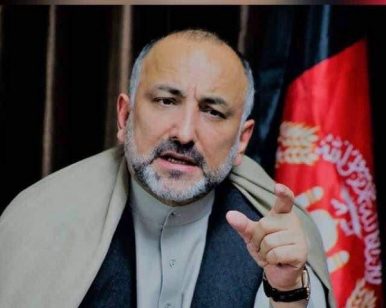
Will This Man Be Afghanistan’s Next President?
As Afghanistan’s national security adviser, Mohammad Haneef Atmar signed the Bilateral Security Agreement (BSA) with the United States, negotiated a peace agreement with Hizb-e-Islami Group (HIG), kept a fragile regional consensus on Afghan war and peace intact until his departure, and undertook major reforms in the Afghan security sector. Today, he is running for the highest office in Afghanistan, challenging his former ally, Mohammad Ashraf Ghani, for the presidency.Pakistan: Turning A Blind Eye In Punjab – Analysis
On January 20, 2019, Counter Terrorism Department (CTD) officials of Punjab Police killed two terrorists, identified as Abdur Rehman and Kashif Langra, in a shootout in Gujranwala District of Punjab. The suspects allegedly belonged to Islamic State (IS, also Daesh) and were gunned down in an exchange of fire, an unnamed CTD spokesperson disclosed, claiming that the two were accomplices of IS ‘local commander’ Zeeshan. The deceased were wanted for their involvement in attacks on Security Forces (SFs) and kidnapping of local and foreign citizens, the spokesperson added.Pakistan has pulled the trigger on itself
Stephen P Cohen, the noted American scholar on South Asia, has a genius description for Pakistani strategic thought. Pakistan, he says, negotiates with the world by holding the gun to its own head: Give me what I want, or I will blow my brains out. You then handle the mess.US Retreat From Afghanistan Opens New Strategic Opportunities for Russia in Central Asia
The New Afghanistan Will Be Built on Ceasefire Solutions and Taliban Tradeoffs
Taliban and Islamic State cause majority of civilian casualties in Afghan war, UN finds
More civilians were killed in Afghanistan in 2018 than in any of the previous nine years, according to a newly released report by the United Nations Assistance Mission in Afghanistan (UNAMA). The majority of these deaths were caused by operations carried out by the Taliban and the Islamic State’s so-called Khorasan province. And even though the Taliban is nominally concerned with how its violence is perceived, the group has been responsible for more civilian casualties than any other party in the conflict.ISRAEL PREPARING FOR CYBER ATTACK BY RUSSIA, CHINA - REPORT
Why China Has Not Caught Up Yet: Military-Technological Superiority and the Limits of Imitation, Reverse Engineering, and Cyber Espionage
China Again—and Again and Again
Skirmish? China-US Row Is A Struggle For Global Supremacy – OpEd
There was an audible sigh of relief when US President Donald Trump suspended imposing tariff hikes on Beijing until he had met his Chinese counterpart, President Xi Jinping. Trump cited substantial progress in negotiations on trade in agricultural goods, intellectual property protection, technology and currency, meaning he could delay increasing tariffs from 10 percent to 25 percent on goods worth $200 billion.Israel & Iran’s Cyber War
Senior Israeli officials have said in an interview for Bloomberg that Iran attempted to hack the country’s missile warning system in 2017.Is the Future of ISIS Female?
MOSUL, Iraq — Sitting in a room in a burned-out house here in 2017, a group of Iraqi Special Operations Forces soldiers and I watched with surprise as two Islamic State fighters appeared on the live video feed of a security camera. The two fighters were preparing to fire a rocket-propelled grenade in our direction. But instead of the usual bearded men with long hair, the fighters, clad in black abayas and niqabs, appeared to be women.Here’s How the United States Can Keep Its Technological Edge
This month, U.S. President Donald Trump signed a new executive order on artificial intelligence, directing federal agencies to prioritize AI investment, research, and development. While far too modest in actionable recommendations, the executive order signals a welcome, more ambitious approach to strengthening the U.S. innovation ecosystem and safeguarding the U.S. technological advantage over China and other countries.Russian Battlefield Awareness and Information Dominance: Improved Capabilities and Future Challenges
IRGC General Says Hormuz Strait Open As Long As Iranian Oil Exported
Putin, Khrushchev and the Lessons of the Cuban Missile Crisis
Will Maduro’s Supporters Abandon Him?
Why Europe Won't Go for American Natural Gas
The U.S. national security community can often overlook how U.S. domestic policy can undermine American foreign policy goals. For example, take Secretary of State Mike Pompeo’s European tour this past month, and the efforts of Vice President Mike Pence at the Munich Security Conference to rally support for Washington’s preferred courses of action. There seems to be a glaring blind spot in how U.S. foreign policy analysts comprehend European resistance to U.S. efforts to increase the pressure on Russia and Iran.