


 The fight against climate change is likely to create the next big technological wave, an opportunity for India Fighting climate change cannot come at the cost of halting the urgent fight against poverty. India has always been torn between an urge to sit at the high table of global negotiations and being seen by the rest of the world as a deal breaker on issues such as global trade and climate change. The International Solar Alliance (ISA), which began its meeting in New Delhi on Sunday, is thus a breakthrough in our global positioning.
 14 March 2018
India must lead the transition to green energy
The fight against climate change is likely to create the next big technological wave, an opportunity for India Fighting climate change cannot come at the cost of halting the urgent fight against poverty. India has always been torn between an urge to sit at the high table of global negotiations and being seen by the rest of the world as a deal breaker on issues such as global trade and climate change. The International Solar Alliance (ISA), which began its meeting in New Delhi on Sunday, is thus a breakthrough in our global positioning. Ethical And Responsible Banking: What India Can Learn From Germany
by Bibhu Mishra
 What the Indian government, RBI and banks can do to promote ethical and responsible banking practices. Adam Smith, who envisioned free market economy in his book The Wealth of Nations(1776) wrote another classic before that, The Theory of Moral Sentiments (1759). In this book, Smith suggests human morality depends on sympathy between agent and spectator, or the individual and other members of society. Smith defined 'mutual sympathy' as the basis of 'moral sentiments'.
Is the Pakistani Judiciary Undermining Counterterrorism Efforts?
By Umair Jamal
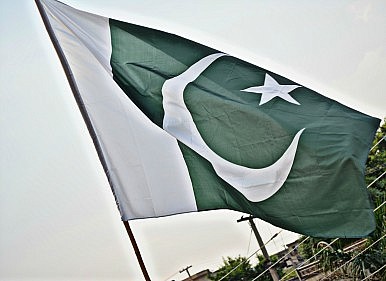 A few days ago, a court in Pakistan barred the government from arresting Hafiz Saeed, the head of the Jamaat-ud Dawa (JuD), a suspected militant organization known for targeting Indian interests. After the Financial Action Task Force (FATF)’s decision to put Pakistan on the so-called grey-list of nations that were not doing enough to combat terrorism financing, the government in Pakistan has been considering different policy options to isolate several domestic militant groups, including JuD.
A New Order for the Indo-Pacific
BRAHMA CHELLANEY,
China has transformed the Indo-Pacific region’s strategic landscape in just five years. If other powers do not step in to counter further challenges to the territorial and maritime status quo, the next five years could entrench China’s strategic advantages. SYDNEY – Security dynamics are changing rapidly in the Indo-Pacific. The region is home not only to the world’s fastest-growing economies, but also to the fastest-increasing military expenditures and naval capabilities, the fiercest competition over natural resources, and the most dangerous strategic hot spots. One might even say that it holds the key to global security.
Buddhist Militancy Rises Again In Sri Lanka
By Alan Keenan*
An upsurge of attacks against Muslims by Sinhala Buddhist militants in Sri Lanka has raised fears of a new round of communal violence. In this Q&A, Crisis Group’s Sri Lanka Senior Analyst Alan Keenan says the government needs to act urgently to prevent the violence from spinning out of control, by enforcing laws against hate speech and arresting and prosecuting those involved in organising the violence. Sri Lanka has declared a state of emergency for ten days to rein in the spread of communal violence, a government spokesperson said on Tuesday, a day after Buddhists and Muslims clashed in the Indian Ocean island’s central district of Kandy. What are the reasons behind this latest communal violence in the country?
Why China Keeps Falling for Pyramid Schemes
By Eugene K. Chow
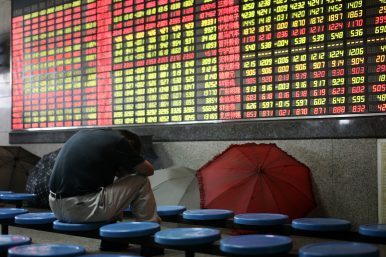 In China, cheap knives and questionable nutritional supplements are the least of regulators’ worries when it comes to pyramid schemes. Crafty scammers have bilked unsuspecting Chinese out of billions of dollars, draining the meager savings accounts of recent college graduates, migrant workers, and pensioners. One pyramid scheme alone defrauded 900,000 people of $7.6 billion. But that’s only the tip of the iceberg. More than 40 million people have been ensnared by these sham investments, according to the China Anti-Pyramid Selling Association.
China’s Domestic Security Spending: An Analysis of Available Data
By: Adrian Zenz
On February 1, 2018, China’s Xinjiang Uyghur Autonomous Region (XUAR) revealed a stunning 92.8 percent increase in its domestic security spending: from 30.05 billion RMB in 2016 to 57.95 billion RMB in 2017 (Xinjiang Net, 3 February). Within a decade, this figure has increased nearly ten-fold, up from 5.45 billion RMB in 2007. This most recent increase is arguably a direct result of the extreme securitization measures implemented by the region’s Party Secretary Chen Quanguo, who unleashed unprecedented police recruitment and police station construction drives (China Brief, 14 March 2017; China Brief, 21 September 2017). However, what is the context of these seemingly staggering figures? How does Xinjiang’s domestic security spending compare to per capita counts in other provinces, to China’s national average, or to other nations? Do XUAR spending increases reflect the built-up of a massive police state, or are they merely reflective of a necessary process of catching up, since China in general and its west in particular featured an under-resourced security apparatus in the early 2000s (China Policy Institute Analysis, February 14 2018)?
A New Chinese Emperor Rises – Analysis
By Marvin C. Ott*
 (FPRI) — Over a very long history, governance has been China’s greatest achievement—and its greatest failure. Every Chinese, whether a senior official in Beijing or a farmer in a remote village, will tell you with certainty that China has the oldest (“five thousand years”) and greatest civilization on the planet. It is a point of deep national pride and with reason. For millennia, China was ruled under a system that placed the Emperor (“the son of Heaven”) at the center as a seemingly all-powerful monarch. There was no constitution, no legal limits in the Western sense on the emperor’s authority. However, he was constrained by institutional norms and practical limitations. The emperor ruled through a class of scholar officials (“mandarins”) who were steeped in a Confucian culture that emphasized authority tempered with benevolence and responsibility. Moreover, China was a vast country with a relatively weak standing army. It was not easy to assert imperial power into the far corners of the empire. A traditional saying noted, “The emperor’s authority stops at the village gate.”
Will China’s Belt and Road Initiative outdo the Marshall Plan?

SEVENTY years ago America passed the Economic Co-operation Act, better known as the Marshall Plan. Drawing inspiration from a speech at Harvard University by George Marshall, America’s secretary of state, it aimed to revive Europe’s war-ravaged economies. Almost five years ago, at a more obscure institution of higher learning, Nazarbayev University in Kazakhstan, China’s president, Xi Jinping, outlined his own vision of economic beneficence. The Belt and Road Initiative (BRI), as it has become known, aims to sprinkle infrastructure, trade and fellow-feeling on more than 70 countries, from the Baltic to the Pacific.
China’s Emerging Data Privacy System and GDPR
Samm Sacks
China’s main standards body recently issued a “specification” covering collection, storage, use, sharing, transfer, and disclosure of personal information. The Personal Information Security Specification (“the Standard”) is set to take effect May 1, 2018. I wrote an analysis of the standard, its place in the broader build out of China’s emerging data protection regime, and a brief comparison with approaches to data privacy under the European Union’s General Data Protection Regulation (GDPR) and in the United States here. Since publishing that piece, I have been in contact with the lead drafter of the standard, Dr. Hong Yanqing, who wrote a response to my post here (in Chinese).
Chinese Views on the 2018 Nuclear Posture Review, and Their Implications
By: Michael S. Chase
DF-26 missiles participating in a military parade in Beijing
The 2018 U.S. Nuclear Posture Review (NPR), released in February, appears to be focused mainly on the challenges presented by Russian nuclear weapons and strategy. Nonetheless, the document also has some potentially important implications for China, where analysts continue to discuss and debate China’s approach to strategic deterrence generally as well as Chinese nuclear policy and strategy and nuclear force modernization in particular (China Brief, January 12). Unsurprisingly, China’s reaction to the latest U.S. NPR has been critical. The PRC Ministry of National Defense spokesperson stated: “We hope the U.S. side will discard its ‘cold-war mentality,’ shoulder its own special and primary responsibility for nuclear disarmament, understand correctly China’s strategic intentions and take a fair view on China’s national defense and military development” (Xinhua, February 5). Similarly, an article in Global Times criticized the NPR, stating that its focus on “defining China as a threat…is an excuse to develop even more nuclear weapons when Washington already possesses the world’s strongest deterrent” (Global Times, Feb 5).
China’s new defense budget: money and manpower
There is an old saying that liberals solve problems by throwing lots of money at it. There is another saying (that I just made up) that governments solve problems by throwing lots of people at it. When it comes to modernizing their military, the Chinese are fortunate in that they can do both. The People’s Liberation Army (PLA) has just been given a plus-up of 8.1% in its budget. This means that Chinese military expenditures will total around RMB1.1 trillion (US$173 billion) for the next year.
A New Chinese Emperor Rises
 Over a very long history, governance has been China’s greatest achievement—and its greatest failure. Every Chinese, whether a senior official in Beijing or a farmer in a remote village, will tell you with certainty that China has the oldest (“five thousand years”) and greatest civilization on the planet. It is a point of deep national pride and with reason. For millennia, China was ruled under a system that placed the Emperor (“the son of Heaven”) at the center as a seemingly all-powerful monarch. There was no constitution, no legal limits in the Western sense on the emperor’s authority. However, he was constrained by institutional norms and practical limitations. The emperor ruled through a class of scholar officials (“mandarins”) who were steeped in a Confucian culture that emphasized authority tempered with benevolence and responsibility. Moreover, China was a vast country with a relatively weak standing army. It was not easy to assert imperial power into the far corners of the empire. A traditional saying noted, “The emperor’s authority stops at the village gate.”
Four Years After Declaring War on Pollution, China Is Winning
By Michael Greenstone
 On March 4, 2014, the Chinese premier, Li Keqiang, told almost 3,000 delegates at the National People’s Congress and many more watching live on state television, “We will resolutely declare war against pollution as we declared war against poverty.” The statement broke from the country’s longstanding policy of putting economic growth over environment, and many wondered whether China would really follow through.
China: Reading the tea leaves
Russia in the Middle East: Energy Forever?
By: Rauf Mammadov
Summary
The Middle East and North Africa (MENA) is an obvious target region for Russian energy diplomacy. Unlike Western European states, Russia has never had an imperial presence in the region. During the Cold War, the Soviet Union pursued the policy of supporting Arab socialist movements under the flag of Communist ideology and served as a counter-balance to the United States’ influence in the region. Hence, bereft of the burden of an imperialist state and by untangling political concerns from its commercial interests, Russia has embarked on a pivot to the energy industry of the MENA region. Russia’s goals can be summarized as:
Find new markets for its oil and gas.
The Most Dangerous Man in Europe Is Jens Weidmann
 Germany’s political and economic establishment believes its handling of the eurozone crisis and its aftermath has been vindicated. After all, the eurozone is intact and enjoying an increasingly robust economic recovery. This conveniently ignores, of course, that the euro survived because of European Central Bank chief Mario Draghi’s promise to do “whatever it takes” and buy as many government bonds as was necessary to prevent the banking systems of Italy and other crisis-riven countries from collapsing, and the euro with them. This promise drew fierce criticism in Germany and Jens Weidmann, head of Germany’s Bundesbank, was the only member of the ECB’s governing council to oppose it.
The World Economy In 2018 – Analysis
By Federico Steinberg and José Pablo Martínez*
This analysis maps out the scenarios facing the world economy in 2018. After arguing that, for the first time since the Great Recession, the world is once again enjoying synchronised growth in practically all regions –which might eliminate the threat of ‘secular stagnation’– we then detail the principal threats to this new economic dynamism. The central source of uncertainty will continue to be the erratic and isolationist policies of Donald Trump. But both in the EU and, above all, in the Middle East and on the Korean peninsula there are also important loci of tensions. This analysis also contextualises these risks within a long-term perspective by identifying the major trends in international economic relations, along with future challenges.
Analysis
US, Russia Remain World’s Top Exporters Of Weapons
By RFE RL
The United States remains the world’s top weapons seller, accounting for 34 percent of global arms sales over the past five years, a new study shows. Russia was the second-largest exporter with about 20 percent global arms deliveries, the Stockholm International Peace Research Institute (SIPRI) reported on March 11 in its latest overview of global weapons transfers. The U.S. share of arms sales is up from 30 percent recorded in the 2008-12 period, SIPRI said. “Based on deals signed during the Obama administration, U.S. arms deliveries in 2013–17 reached their highest level since the late 1990s,’ said Aude Fleurant (EDS: a woman), director of the SIPRI Arms and Military Expenditure Program.
Dutch intel agency: Volume, complexity of cyberattacks rises
By: Mike Corder
/arc-anglerfish-arc2-prod-mco.s3.amazonaws.com/public/AVFHW7I7SJDVLFMR5QHRHI3W5E.jpg) THE HAGUE, Netherlands — Attempts at digital espionage and online political manipulation in Europe are on the rise both in number and in complexity, the Netherlands’ main intelligence agency said Tuesday in its annual report. Adding its voice to fears around the world of a rise in covert digital influence and espionage, the Dutch General Intelligence and Security Service said in its 2017 report a growing number of foreign powers are using cyber espionage “to acquire information that they use for (geo) political gain.”
THE HAGUE, Netherlands — Attempts at digital espionage and online political manipulation in Europe are on the rise both in number and in complexity, the Netherlands’ main intelligence agency said Tuesday in its annual report. Adding its voice to fears around the world of a rise in covert digital influence and espionage, the Dutch General Intelligence and Security Service said in its 2017 report a growing number of foreign powers are using cyber espionage “to acquire information that they use for (geo) political gain.”If War Comes, Russia Could Disconnect from the Internet. Yes, the Entire Country
BY PATRICK TUCKER
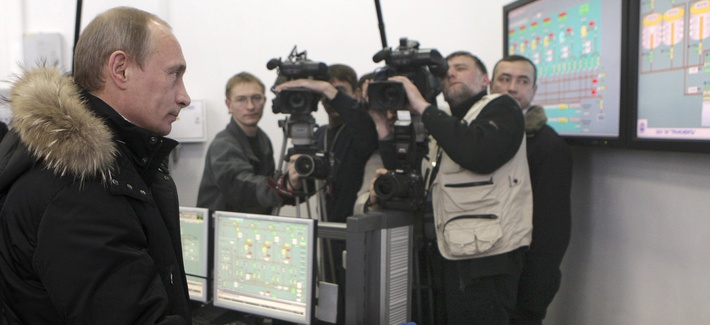 Robust internal networks will keep the military and government operating, says Putin’s top IT advisor. A two-year-old effort to allow the Russian military to rely solely on internal networks during wartime has apparently blossomed into support for a digitally isolated government and civil society as well, a top advisor to Vladimir Putin said this week. “Technically, we are ready for any action now,” Herman Klimenkotold Russian television station NTV on March 6. He added that any such move would not be painless. In 2016, the government began to operate the Closed Data Transfer Segment, an internal intranet for military and other officials. Klimenko seems to have suggested that the Segment could handle traffic for the rest of the country as well.
To defend against hostile nations, America needs fierce cyberpower
BY MICHAEL HAYDEN
 The “Russia story” is big news here in Washington, rightly consuming a lot of the oxygen around town, but there are also some important subtexts at work in the Russia plot line. Like, what should be the ground rules for any future confrontation in the cyber domain? Three weeks ago, in front of the Senate Intelligence Committee, National Security Agency Director Mike Rogers easily joined consensus with the rest of America’s intelligence leadership that the Russians interfered in the 2016 election and were expected do so again this year and in 2020. The collective intelligence leadership also conceded that they had not been given specific presidential direction to do much about it.
Telecom and National Security
James Andrew Lewis
Everyone had fun ridiculing a draft National Security Council (NSC) proposal to create a government-owned 5G (fifth generation) telecom network, but take a step back and look at the problem the NSC staff was trying to solve. Before we congratulate ourselves too heartily for stopping a bad idea, recognize that none of the critics has any alternative proposals on how to fix what will be a major blow to U.S. security, largely self-inflicted. A simple explanation is that telecom is a strategic industry. China has realized this and moved aggressively to dominate the market while the United States fumbled around. The steadily approaching day when the United States will depend on Chinese telecom equipment means that China could gain unparalleled intelligence advantage over us.
Data and analytics strategy: Lessons learned from spy agencies
GRAPEVINE, Texas -- IT leaders looking to sharpen their data and analytics programs may want to think less like a CIO and more like the CIA, said Jim Hare, research vice president at Gartner. At this week's Gartner Data and Analytics Summit, Hare detailed five best practices from the U.S. Intelligence Community that can improve an enterprise's data and analytics strategy. "We [at Gartner] always encourage clients to look outside their own industries for new ideas and new ways of innovating," said Hare, who previously worked in the defense industry.
Training with ‘squadrones’? It’s happening for the Marines
By: Kelsey Atherton
/arc-anglerfish-arc2-prod-mco.s3.amazonaws.com/public/6E5C7HFLGFGLVFXZFFMJGORCKM.jpg) In the spring of 2013, over drinks somewhere in Washington, a Marine officer candidate told me about an idea he had. He was getting ready for a wargame — a weekend in the field simulating a combat engagement — and he wanted to use his discretionary budget for the activity to buy a drone. Now, the military has plenty of drones, from Global Hawks on down, but nothing currently in the inventory could match both the capability and the disposability he wanted. So he was going to buy a camera drone kit for less than $1,000, and try to field it in the wargame.
In the spring of 2013, over drinks somewhere in Washington, a Marine officer candidate told me about an idea he had. He was getting ready for a wargame — a weekend in the field simulating a combat engagement — and he wanted to use his discretionary budget for the activity to buy a drone. Now, the military has plenty of drones, from Global Hawks on down, but nothing currently in the inventory could match both the capability and the disposability he wanted. So he was going to buy a camera drone kit for less than $1,000, and try to field it in the wargame.
Subscribe to:
Posts (Atom)